My Preface
The Savior of the world said: “Come unto me, all ye that labour and are heavy laden, and I will give you rest.[1]
The purpose of this blog is to help encourage all who labour for Christ (Greek kopiao: those who “grow weary, exhausted with toil or burdens of grief; to feel fatigue[2]) to come unto Christ ever more fully and “enter into His rest.” My intention is to awaken you to certain scriptural passages that detail events experienced by many others of past gospel dispensations, over hundreds of years of religious history. The detailed descriptions of these events articulate powerful testimonials achieved by those who valiantly took to heart our Savior’s invitation to: “Come unto me,” that He might show us the greater things, the knowledge which is been hidden up because of unbelief;[3] and “If any man thirst, let him come unto me, and drink.”[4]
As a significant and powerful side-note, these events weren’t experienced by Holy prophets alone, as some may suppose, but by an exceedingly great many other saints while yet in mortality; though hard to imagine, but nonetheless true.[5] This you will soon see in following posts. And, because these profound experiences are so vividly chronicled by prophet writers of the Book of Mormon (and other books of the standard works), it becomes apparent they are intended to be stepping-stones leading to the fullest blessings of the gospel of Christ, even while living within the confines of our mortal lives. And because of the sheer numbers, it seems they are intended to be universally available to all saints, of all gospel dispensations. In reality, the realization of the greater spiritual experiences boils down to the strength of one’s faith and how he or she perceives spiritual matters.
With this being said, it seems these events are intended to lure our faith to the highest levels of spiritual altitudes and possibilities; yea, to the highest levels of mortal man’s spiritual maturity. This should be both encouraging and exciting to every Latter-day Saint that wishes to access the fullness of the gospel of Christ. As we will see in the next few posts, the Lord does NOT intend that His covenant people should stagnate in the shadows of limited knowledge or testimony; but instead, to increase in the brilliance of God’s light and understanding–until that perfect day. Through the Prophet Joseph Smith, the Lord said: “That which is of God is light; and he that receiveth light, and continueth in God, receiveth more light; and that light growth brighter and brighter until the perfect day.[6]
I would like to add a crucial piece of advice to every reader, going forward: please give special attention to the footnoted material sighted herein: this is an important and irreplaceable key to the evidence of the thoughts presented. Most will be tempted to simply read-on without considering the evidence of the referenced material. But, each and every footnote is important and carries much weight to the thoughts expressed. The homilies and important doctrinal instructions will be found in the referenced material throughout the upcoming blog posts, not in my limited thoughts or inadequate expressions.
It’s my intent to lend great emphasis to a number of scriptural passages by throwing a beam of light upon them. Some of the crucial subjects we’ll be discussing going forward, include: the process of being born again; the baptism of fire and of the Holy Ghost; justification; sanctification; and eventual redemption. What do these words really mean and are they important to us today? Together, we’ll investigate their significance and their scriptural definitions. I maintain they are critical to my own individual spiritual advancement and maturing, but you’ll need to find out for yourself if they are important to you, as the Spirit of the Lord graciously speaks to your heart and mind.
All too often, when we open the scriptures for daily reading, we have the tendency to gloss over certain words without giving technical thought to their meaning; and by so doing, we sometimes fail to understand the greater message–the greater portion of the word! But, if we ponder the scriptural definition of each word, and carefully consider the powerful effects each of these words play upon the eager beneficiary, they take on a whole new light and give way to a far deeper understanding of the context in which they are used. By so doing, they will resonate with much greater meaning deep within our souls, and at the same time, draw us ever nearer to God if we believe and obey.
So, come with me, and let’s open our eyes together as we consider some of the greater portions of the word. But remember, view these things with your spiritual eyes, that your heart may correctly discern between truth and error. Take the time to pray, and absorb that which seems to speak truth to your soul; discard all the rest!
I wish to make perfectly clear to everyone that may continue to read this blog, going forward. I’m obviously not a spokesman for the church of Jesus Christ of Latter-day Saints, in any way. I hold no significant priesthood office of responsibility. I am no one of any prominent or particular importance. My only calling of influence is with my family, as a father and a husband. Outside this boundary, my responsibility lies no further than that of any other lay member of the church, which is the mandate to teach and edify one another. So, take my words as with a grain of salt. I only ask that you seriously and prayerfully consider the words and verses we’ll be turning a spotlight to and discussing. It’s my hope that we each come away with a greater understanding by gleaning all we can from each highlighted word and verse. So again, come with me; let’s venture out to the deeper waters of the gospel sea together, and experience a greater portion of the word, as the Spirit takes us there.
Additionally, if you like what you have read so far, may I invite you to sign up for my email notifications. Nothing will be sent to you, other than a notification of my newest blog. Your email address will not be used to sell to other entities, nor will it be used to try to sell you anything from me, or even to send you obnoxious emails. The only email you’ll receive is a notification to let you know I have posted a new blog. That’s it, nothing more. Thanks for your interest in investigating The Greater Portion Blog. Please know that I welcome and encourage your thoughts and opinions as well. Please feel free to leave any comments you wish (click on the word “Comment” just under the Blog title). If you agree with the post, please let me know, and if you disagree, please briefly explain your thoughts; and if you wish, let’s have a dialogue together. Thanks again!
[1] Matt 11:28
[2] New Strong’s, p. G143; See also Young’s Analytical Concordance to the Bible, by Robert Young; Hendrickson Publishers Marketing, LLC, Peabody, MA; August 2014; p. 581
[3] Ether 4:13-14
[4] John 7:37
[5] See Alma 13:12
[6] D&C 50:24 (I believe this to be the day we are consumed in the Light of lights; consumed in the brilliance of Christ’s love and His person and glory: a day greater than any other day. Indeed, a most perfect day)
 because we have prophets, apostles, and temples; because we have been given all the spiritual gifts and tools the Lord has given in any other dispensation of time to bring us into His perfection; it is indeed a challenge not to take it all for granted and to remain hungry for more gospel knowledge and even more pronounced spiritual blessings. As long as we attend church regularly, carry a current temple recommend and use it, listen to and read the words of modern prophets, always try to overcome a number of our sins and weaknesses, it’s easy to believe we are meeting the Lord’s expectations in our individual mortal journeys. But, a nagging question still remains, “have we done all we can?” My questions are not intended to make one feel depressed or hopeless, but instead, to cause each one of us to the sobering question: “Are we taking advantage of the weightier opportunities the FULLNESS of the gospel provides for us? Are we taking the advantages the Lord anticipates for us?” I believe that if we understood more about the gospel, no one would feel hopeless, but rather, it should leave us all feeling a great measure of hope in our salvation and our Savior’s rehabilitating power to change us with a “mighty change.” (
 As we continue these blogs, we will address this cardinally critical subject with much greater detail, but for now, let’s evaluate our individual responsibility (and blessing) to acquiring all the knowledge and understanding we can about God’s plan of salvation. Though we may feel we already have enough to sustain our own testimonies, do we really? What if the brethren made a drastic decision that affects the entire church in a way you don’t agree with? Could you deal with it? From a totally different perspective, does an all-knowing God respect us when we treat lightly the things (Hebrew devarim, meaning words) He has given us to learn from? Would He give us a “A” or an “F” or
 something in between for our gospel studies? Do we have enough knowledge of the restored gospel to effectively communicate it to our neighbors, our friends, and other family members who are open-minded, but unfamiliar with our beliefs or why we believe the way we do? Could we compassionately, but boldly, address the many opposing concerns held by ministers or other religious potentates that could actually help them understand our perspectives better? And, a question that’s even much more disturbing, but all too common now days: “Do we have enough knowledge and understanding to help open-minded loved ones find their way back when their testimonies are waning or have failed them altogether?”
 If the occasion presented itself, could we teach or defend our faith to virtually anyone, particularly the honest in heart? Or, are we often left with one tool only, to bear an honest and sincere testimony? Please don’t get me wrong, a burning testimony is a wonderful and powerful tool and gift from God, but it needs constant nurturing that it may be intensified. It is true that testimonies may carry the power to touch another’s heart; but, just for a moment, consider how valuable and helpful it would be if, coupled with a powerful testimony, we became so familiar with gospel truths, that we are able to articulate doctrinal explanations that address concerns over doctrinal differences with anyone of another faith? Wouldn’t it be helpful to have enough knowledge of the plan of salvation to add to another’s faith, rather than simply leaving them dangling upon our testimonies alone? Bearing pure testimony is indeed a powerful tool often exercised by prophets. But, in order to help educate and fill one’s soul, they almost always include powerful evidences supporting their convictions and beliefs.
 So, with all this said, what does God expect of us when it comes to obtaining gospel knowledge? Well, for beginners, it goes without debate that knowledge is one of His main attributes. It is obviously part of what makes Him God. But, does He expect us to acquire great knowledge, or is it good enough to simply believe in the gospel and its restoration? Let’s take a look at just a few scriptures that may help answer this question. Nephi acknowledged that man’s tendency is to dismiss much and to “cast many things [words] away which are written and esteem them as things [words] of naught. But I, Nephi, have written what I have written, and I esteem it as of great worth.” (
 To put it short, those who persist in only the lesser portion of the word, those who routinely relax their gospel intellect, as though they are shipwrecked, around the seemingly safer end of the gospel bay, will miss the wide expansive seas of the thought-provoking, deeper things of God—even the
 hidden mysteries of His kingdom. Nephi laments over this reality and throws caution to us in the latter-days. Revealing his heart’s poignant thoughts, he writes: “I am left to mourn . . . for they will not search knowledge, nor understand great knowledge, when it is given unto them in plainness.” (
 Abraham said: “And, finding there was greater happiness and peace for me, I sought for the blessings of THE fathers [not HIS fathers], and the right whereunto I should be ordained to administer the same; having been myself a follower of righteousness, DESIRING also to be one who possessed GREAT KNOWLEDGE, and to be a GREAT follower of righteousness, and to possess A GREATER KNOWLEDGE, . . .” (
 How well we LISTEN (Hebrew shama) and how much we really hear INTELLIGIBLY really boils down to the strength of our faith and desire to learn more and to obey. Do we want to feast or nibble? It becomes apparent that God expects us to feast upon His words, rather than nibble, and also to understand His words through the tutelage of the Spirit! We have all the needful tools: We have prayer! We have been given the gift of the Holy Ghost! We have the scriptures, particularly the Book of Mormon! And we have the words of modern prophets who inspire and lift us! We have all we need to learn and EXPERIENCE so much more, if we would but put into practice a greater individual effort. How much of our time is spent on our own kingdoms, or relaxation, or entertainment? Could our knowledge and testimonies be greatly intensified if we worked a little less and sought for a little less entertainment and rest and relaxation? I believe it could … actually … I know it would!
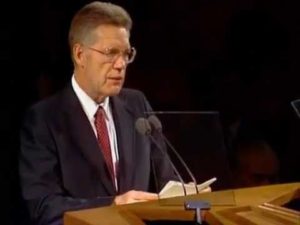 Elder Bruce R. McConkie penned the following:
 But, when we learn about and accept only a portion of the word, we are like a cake that the prophet Hosea described as being, spiritually “not turned” (Hebrew idiom for “half-baked”). (
 We are told that knowledge is power, and that knowledge keeps us from confusion. Again, said Joseph: “Knowledge does away with darkness, suspense and doubt; for these cannot exist where knowledge is . . . In knowledge there is power. God has more power than all other beings, because He has greater knowledge.” (
  Rather than a continuous diet of milk only (the foundational and fundamentals—a lessor portion of the word), Paul counsels the church to mature into the meat of the gospel. Accordingly, in his epistle to the Hebrews, Paul boldly pressed the members to mature in the gospel by advancing from the necessary milk to the also necessitating meat. If we fail to do so and focus only on the first principles of the gospel indefinitely (the things we should have learned during our initial conversion), he describes us as being unskillful in the word of righteousness; without maturity, and only a babe in the word. In all reality, we deadlock and stunt our spiritual growth towards Christ. Paul continues: “For when for the time ye
 ought to be teachers, ye have need that one teach you again which be the first principles of the oracles [
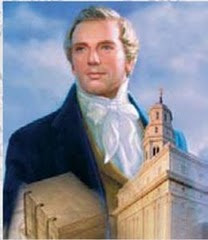 27, 1843, the prophet Joseph made the following remark from the pulpit:
 In the proverbs of Solomon, the son of David, King of Israel, we read:
 To help us understand the principle of acquiring all the light we can, the Lord said the following through the prophet Joseph Smith:
 Though we love and sustain our brethren, particularly those in the First Presidency, Quorum of the Twelve, and our local leadership. Though we listen to and obey their inspired counsel and teachings, we need testimonies of our own; testimonies that are born exclusively through personal experiences. Though we eagerly follow their lead, we need to become familiar with spiritual and revelatory experiences with the scriptures of our own. It was Moses that yearned:
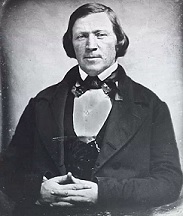 “. . . nothing short of the Almighty, nothing short of the Holy Spirit of Jesus Christ, can prove to you that this work is the work of God. . . . Salvation is an individual operation … There are those among this people who are influenced, controlled, and biased in their thoughts, actions, and feelings by some other individual or family, on whom they place their dependence for spiritual and temporal instruction, and for salvation in the end. These persons do not depend upon themselves for salvation, but upon another of their poor, weak, fellow mortals. ‘I do not depend upon any inherent goodness of my own,’ say they, ‘to introduce me into the kingdom of glory, I depend upon you, brother Joseph, upon you, brother Brigham, upon you, brother Heber, or upon you, brother James; I believe your judgement is superior to mine, and consequently I let you judge me; your spirit is better than mine, therefore you can do good for me; I submit myself wholly to you, and place in you all my confidence for life and salvation; where you go I will go, and where you tarry there I will stay; expecting that you will introduce me through the gates into the heavenly Jerusalem.’
 According to Brigham and the scriptures, it’s not in the Lord’s economy for our salvation to be solely based upon our acceptance of the Lord’s prophets. As wonderful and spiritual as they may be, they can only lead us TO the veil. The Lord expects each individual to receive knowledge and revelation through the Holy Ghost for themselves in order to pass through the veil. In fact, passing through the veil is exactly what the Lord anticipates for each of us. This is where we receive even greater knowledge; knowledge which has been hid up because of unbelief. (
 We often read in scripture the term: “hard hearted,” sometimes rendered “hardhearted,” or even a hardness of heart, etc… In western culture, we generally consider the heart to be the symbolic emotional center of the body. It’s here where our motives, feelings, affections, and desires emanate from. When we characterize someone as being hardhearted, we generally interpret that as someone who cares little about, hardens his emotions towards, or turns his back from something. English dictionaries characterize it as: heartless, cold, or callous; someone who is unfeeling or incapable of being moved to pity. But, if we take a closer look at how the term is used in scripture, especially from the Aramaic/Hebrew and Greek mindset (the main languages and spiritual mindset Jesus was most familiar with) we come away with an even greater depth of understanding. The Hebrew and Aramaic languages related and are very similar, being dialects of each other. Only a small portion of the Old Testament was written in Aramaic, with the remaining portion in Hebrew.
  Ancient prophet writers (both Old and New Testaments) often employed idioms and other encoding techniques peculiar to one of these languages and customs. Idioms are words, or compounds of two or more words and are not to be taken literally. They do however, carry specific and intended meanings that reach beyond the meaning of the individual words by themselves. A good example of an American idiom would be: “It’s raining cats and dogs!” Of course, when one uses this idiomatic phrase, it’s not intended to be taken literally, of course, dogs and cats don’t fall from the sky. Rather, it’s intended to be a figure of speech suggesting that it’s raining very hard.
 The Greek word for heart is: kardia. Again, besides being a physical organ of the body, it is defined as: “The chief organ of the body; By an easy transition, the word came to stand for man’s entire mental and moral activity, both the rational and the emotional elements. It denotes the thoughts, the understanding, the reasoning, the imagination, and the intentions of the body.”
 In the previous post, we learned that having a hard heart, or being hardhearted, is something more than being closed minded, or one who is heartless, cold, or callous towards a certain truth. It’s more than someone who is unfeeling or incapable of being moved to pity. Rather, this phrase, which is often employed by Book of Mormon writers, is both a Hebrew and Greek idiom, which literally means to fail to understand what you see or hear. It symbolically portrays dryness of heart, destitute of a desire to understand or comprehend more. Also, it’s a concept used to describe one that lacks the desire to understand God’s mysteries. In the Greek Lexicon, the word is: sklerokardia. It’s the feminine noun of the words, hard and heart combined to form a Greek idiom. The meaning of the two together is, hard-heartedness, i.e. specifically a destitution of (spiritual) perception—hardness of heart.
 word; and being self-imposed, he continually rests comfortably upon the lesser portion of the word, rather than adoring the depths of God’s mysteries, found only within the depths of the greater portion. Either we routinely (and seemingly safely) sail our individual sea-worthy ships only within the shallow harbor of the lesser portion of the word, or, relying upon the Holy Ghost as our guide, we boldly raise our sails to the top of the masts and set sail upon the vast open waters of the high gospel seas, ever searching for spiritual treasures found only within the depths of the greater portion of the word. The choice is ours, individually.
 Even Jesus Christ applied this idiom on at least two separate occasions while reproving certain of His disciples. Let’s single out one of those occasions and put our study tools to use and see if they apply here. Just after the miraculous event of serving and filling the famished bellies of about four-thousand souls with a meager seven loaves of bread and a few small fishes (Mark’s account), Jesus later boards a ship to cross to the other side. The scriptures continue: “Now the disciples had forgotten to take bread, neither had they in the ship with them more than one loaf. And he charged them, saying, [t]ake heed, beware of the leaven of the Pharisees, and of the leaven of Herod. And they reasoned among themselves, saying, [i]t is because we have no bread. And when Jesus knew it, he said unto them, [w]hy reason ye, because ye have no bread? [P]erceive ye not yet, neither understand? [H]ave ye your heart yet hardened? Having eyes, ye see not? [A]nd having ears, ye hear not? [A]nd do ye not remember? . . . And he said unto them, [h]ow is it that ye do not understand?
 Another descriptive phrase Jesus employed in the scripture above, and often used throughout the scriptures, is having eyes to see but seeing not. In February of 1831, the Lord said through the Prophet Joseph Smith: “He who hath faith to see shall see. He who hath faith to hear shall hear.” In the Greek mindset of seeing, and in the context of this phrase, it has little to do with seeing with one’s physical eyes; rather, it’s referring to the heart or inner man; the spiritual eye. In Matthew 13:13 it says: “Therefore speak I unto them in parables: because they seeing see not; and hearing they hear not, neither do they understand.” As we have learned, when Christ perceived those with hard hearts, He spoke to them in parables. But, what does He mean by saying, because they seeing see not? The Greek word to see (blepo), in the context that it’s being used here, is a verb meaning, observe, discern, perceive, implying special contemplation, and is rendered: mental vision and to perceive; expressing a more intent, earnest, contemplation.